TL;DR
Fifteen years of building SEO strategies and marketing campaigns didn’t prepare me for the immigrant life of a marketing specialist starting from zero in a new country. This is a personal look at leaving Russia, three strange years in Indonesia, and a fresh start in Buenos Aires – plus the language mess and job hunt that came with it. No advice here, just the honest, uneven process of rebuilding a career abroad.
Three weeks ago I sat in a rented apartment in Buenos Aires, filling out a job application in English, with a half-finished Spanish lease agreement on the table and a Russian voice note from my mother playing in the background. Somewhere between the three languages, I genuinely lost track of which version of myself I was presenting.
My name is Peter. We haven’t met, but I want to tell you a bit about myself anyway. This isn’t a guide or a listicle with five tips for expats. It’s an honest, slightly messy account of what fifteen years in marketing looks like once you turn into a person filling out a visa form instead of accepting a promotion. This is what the immigrant life of a marketing specialist with real experience behind him actually feels like from the inside – less strategy deck, more paperwork and second-guessing.
There’s also a strange side effect nobody warns you about: every recruiter, every hiring manager, every new colleague meets you with zero context. Years of projects, launches, and internal jokes about specific clients get compressed into a resume line and a LinkedIn summary. You become, professionally speaking, a stranger everywhere at once.
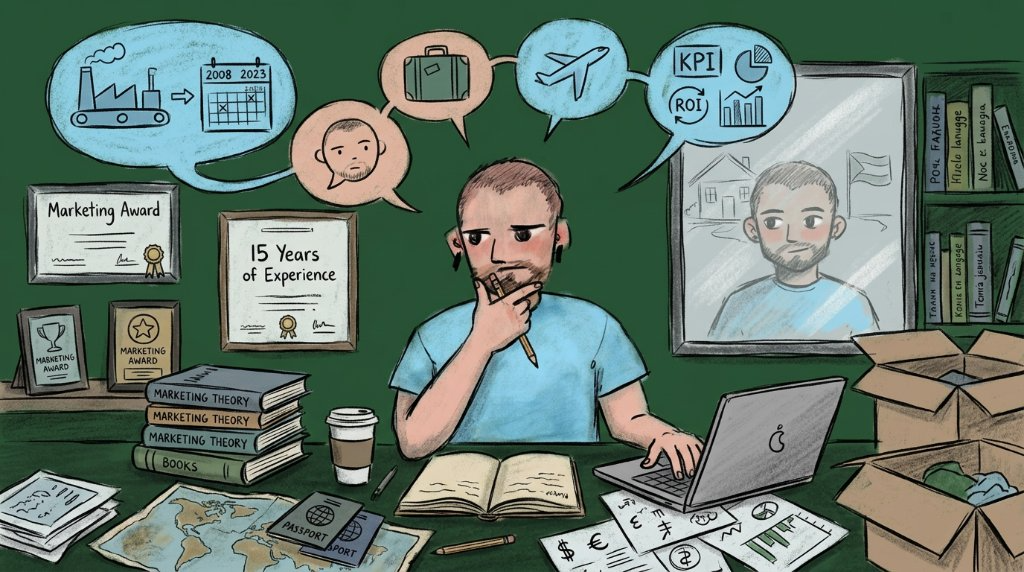
Years Before Anyone Called Me an Immigrant
I’ve spent fifteen years in marketing. I started as a plain copywriter and content manager, back when that job title barely existed as a real career path in Russia. Nobody had a clear roadmap for it yet. You learned on the job, broke things, fixed them, and figured out what worked by watching the numbers move.
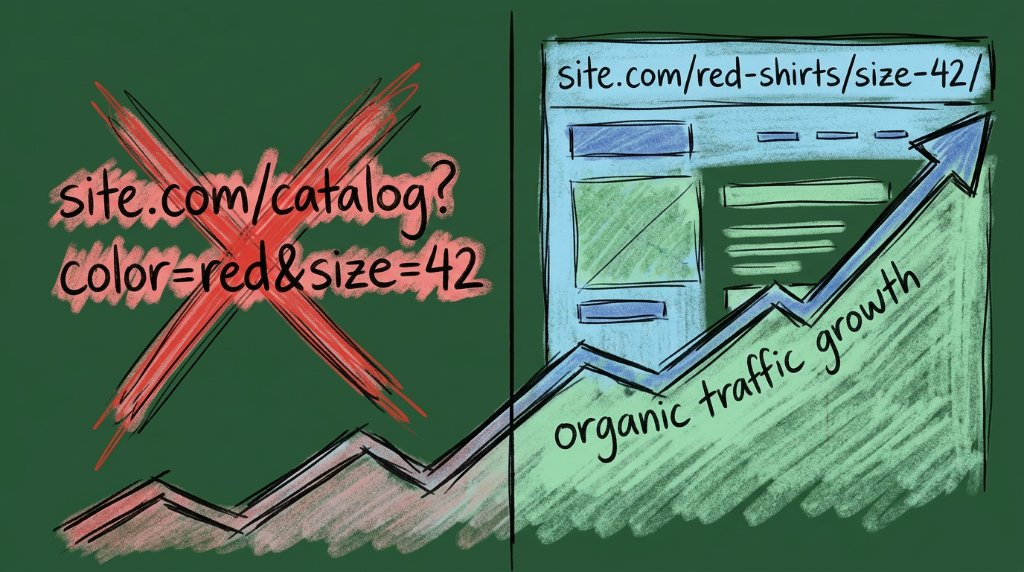
Somewhere along the way, my team and I built one of the first serious faceted filters (the clickable options that narrow a product catalog down by price, brand, size, and so on) for an online store, at a time when nothing quite like it existed on the Russian market. Here’s the technical part, kept simple. A standard filter generates a URL with parameters tacked onto the end, something like site.com/catalog?color=red&size=42. Search engines mostly ignore pages like that. They still do, honestly, even now. My team figured out we could build real, static pages instead – ones a search engine could actually crawl and index like any normal page on the site. After we rolled it out, organic traffic on that store started climbing in a way nobody on the team had fully expected.
I bring this up not to brag about a project from a decade ago, but because it explains how I see my own field today. New tools, new platforms, new AI-driven dashboards rarely surprise me anymore. I’ve built too many workarounds and quiet technical fixes that later turned into industry standards to get impressed by a new plugin or a shiny automation feature. That confidence followed me through every job change in Russia. It did not, as it turns out, automatically follow me across a border.
Leaving the Nest: Russia to Indonesia
After the war started, I left the life I’d built in Russia and landed, of all places, in Indonesia. Not the obvious pick for a marketer trying to plug into global, remote-friendly work. Three years in a country that isn’t particularly warm toward foreigners who aren’t tourists, and even tourists mostly get treated as wallets with legs, cash sources moving between resorts and visa offices.
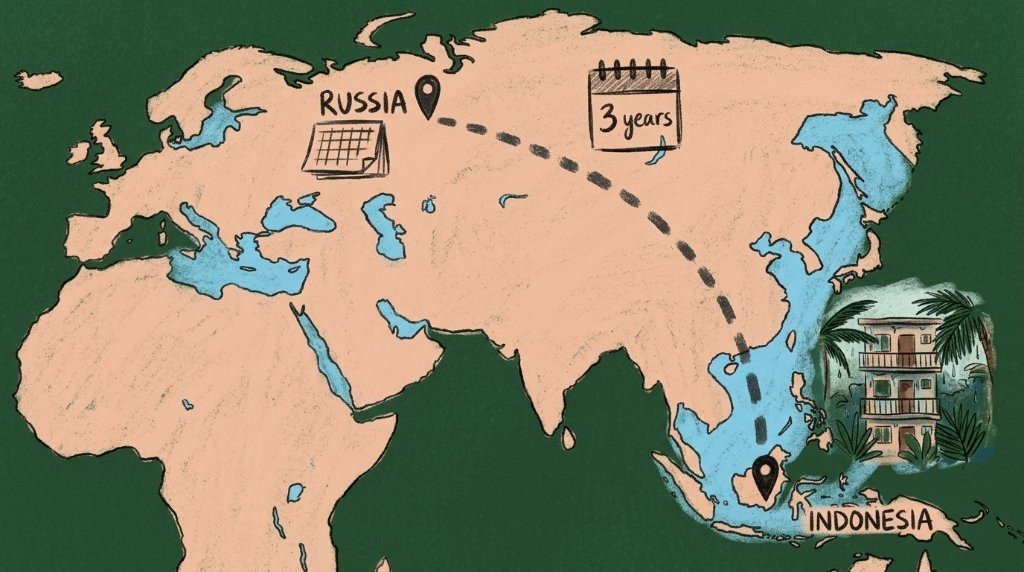
Those three years were genuinely interesting, friction included. I adjusted to bureaucracy that made Russian paperwork look almost relaxed by comparison – visa runs, agents who half-promised things they couldn’t deliver, offices where the rules seemed to shift depending on who was behind the counter that day. I adjusted to a work culture, a climate, a daily rhythm that had nothing to do with the previous years of my career. Remote work from a humid apartment, laptop propped on a stack of books because the desk situation never quite worked out, calls scheduled around time zones that never lined up cleanly with clients back home.
I don’t regret the years there. I also don’t romanticize them. It was three years of my life, lived through, not curated for a highlight reel.
By August 2025, my wife and I packed up again and moved to Buenos Aires.
Buenos Aires, and the Real Reason We Moved
Why Argentina, out of every country on the map? I won’t dress this up. The honest answer is citizenship. Argentina offers a realistic path to a passport, and after years of visa uncertainty in two other countries, that mattered more than almost anything else on our list.

Don’t read that as cold calculation, though. I’m not chasing a document to trade it for another move somewhere else afterward. I want the papers, and I want to build an actual life here – an apartment that feels permanent instead of temporary, neighbors who recognize my face, a grocery store where I stop needing Google Translate for the labels. Buenos Aires is where I plan to stay, passport or no passport.
The city itself has been easier to like than I expected. It’s loud, a little chaotic in places, full of cafés where people sit for hours over one coffee. It doesn’t feel like a stopover. It feels like somewhere I could genuinely settle, once the paperwork stops eating my weekends.
So here I am: a marketing specialist with years of experience, sitting in a new city, trying to figure out how a career built for one market fits into a very specific, very local life on another continent entirely.
The Immigrant Life of a Marketing Specialist: English, Spanish, and a Brain That’s Already Full
Stepping onto the international job market after years working mostly inside one country teaches you something fast: your English is probably not as strong as you assumed it was. I can speak it. I can write in it. I’d call my level solidly average – good enough for daily work, not quite good enough to compete without hesitation against native speakers for senior international roles.
Now add Spanish to the pile, because living somewhere without learning the local language isn’t really an option I’m willing to take. I want to learn it. The problem is my head already runs on two languages at full capacity, and squeezing a third one in some evenings feels like trying to fit one more suitcase into a car that was already packed to the ceiling.
There’s a small upside worth a short detour here. Spanish grew out of spoken Latin, and Russian, despite looking nothing like it on the page, absorbed a surprisingly large number of words from that same spoken Latin over the centuries. Vocabulary overlaps more than you’d expect walking into it cold. Not enough to make Spanish easy. Enough to make it feel less like starting from absolute zero, and more like recognizing distant relatives at a family gathering. Might turn that into its own piece someday, if anyone besides me finds it interesting.
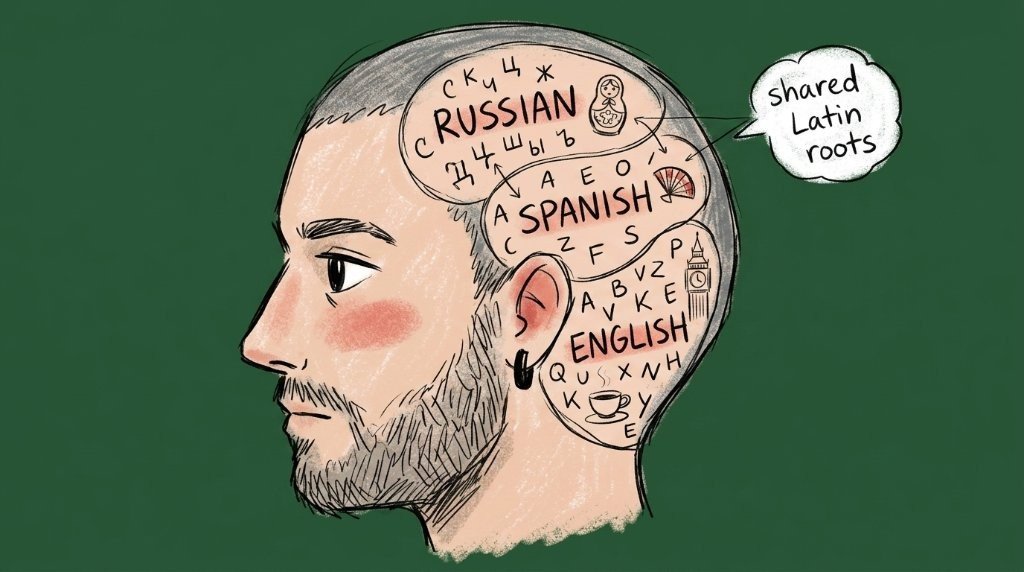
The bigger dilemma isn’t grammar, though. It’s direction. Two paths sit in front of me, and I keep switching between them depending on the week:
- Push English higher, aim for remote and international roles, compete globally from a desk in Buenos Aires without ever needing to argue with a landlord in Spanish.
- Push Spanish instead, aim for the local market, trade some ceiling on salary for faster integration and real conversations at the corner store.
I haven’t picked one path yet. Most days I do a bit of both and call that progress.
Sending Resumes Again After a Decade of Being Headhunted
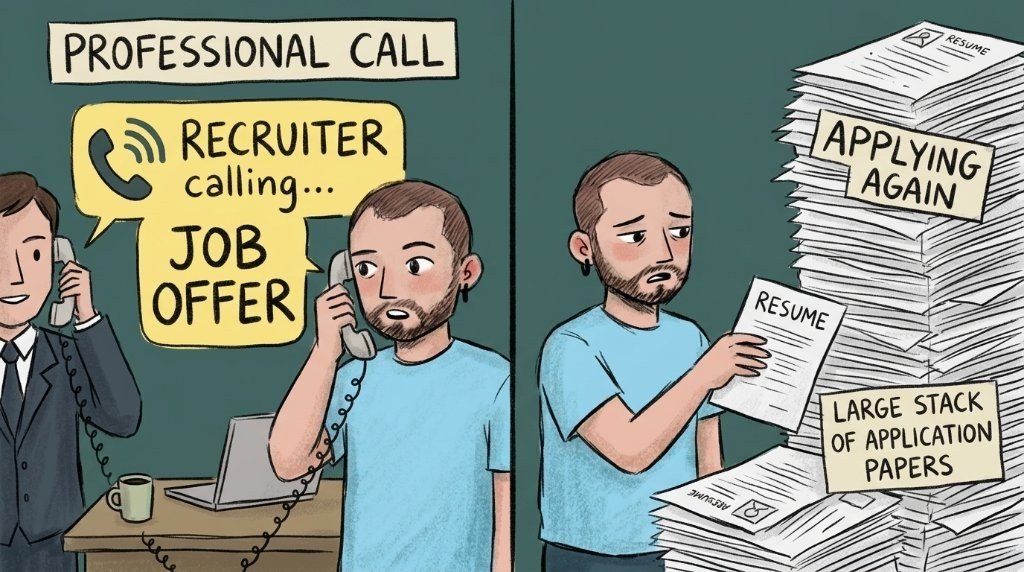
Here’s something that caught me off guard more than the language issue. My last four jobs in Russia all arrived the same way: someone reached out to me first. Recruiters headhunted me (contacted me directly to offer a role, instead of me applying through a job posting), usually with a better offer than the one I already had. I hadn’t written a fresh resume in years. I hadn’t sat through a cold first-round interview with someone who had no idea what I’d already built.
Now I’m back to filling out application forms that ask me to summarize THE FIFTEEN years of marketing work in a text box with a character limit, then waiting to hear back from people who’ve never heard of me or the projects behind my name. It’s a strange kind of humility, going from being chased to doing the chasing, even with a track record that includes work most people in the field would recognize as genuinely early and genuinely effective for its time.
I’m not complaining about it, exactly. It’s a different rhythm, one I have to relearn at roughly the same speed I’m relearning how to order coffee in Spanish and read a lease agreement without a dictionary open on the other tab.
That’s roughly where things stand. Years of marketing and SEO work behind me, a residency application in progress, a Spanish notebook I open some evenings and ignore on others, and a resume rewritten more times this year than in the entire previous decade combined. The immigrant life of a marketing specialist with this kind of background doesn’t come with a clean playbook – you handle whatever the week throws at you, in whichever language it happens to show up in.
If you’re looking for a specialist with deep expertise (remote or based in Buenos Aires), I’d be happy to connect and create something awesome together. DM me or leave a comment! 👇